One account, one username
You sign up once. Your username is how another person's app reaches you — to split a bill, to share a list, to lend you something. It is the same handle in every app of the suite, on web and on your phone.
AsaanLife is a suite, not a folder of unrelated apps. Money, shared lists and the habits you are keeping all sit under one account, one username and one set of organizations — so the people you live and work with see exactly what you shared with them, and nothing else.
Who you are, who you share with, and which organization you are looking at. Get those right once and an app can be small, because none of them has to reinvent identity, membership or permission.
You sign up once. Your username is how another person's app reaches you — to split a bill, to share a list, to lend you something. It is the same handle in every app of the suite, on web and on your phone.
Everything belongs to an organization, never loosely to you: a personal one that is made with your account, and as many shared ones as you need for a household, a company or a trip. Switching organization switches the whole suite at once.
The suite is the product. A shared expense knows who owes what; a tracker knows whose day it is. As more apps land, a car service will be a vehicle record and a finance expense — one event, recorded once, linked both ways.
You can open any of them right now with the same account. Below each is what it actually does — not a category name.
Accounts, transactions, recurring bills, transfers, and the loans and splits that involve other people. Every amount carries its own currency, and a conversion keeps the rate it was made at — so last year's total still reads the way it did last year.
Shared lists with real membership: assign an item to someone, give it a day, and see what is still open. Built for a household or a small team rather than a personal scratchpad.
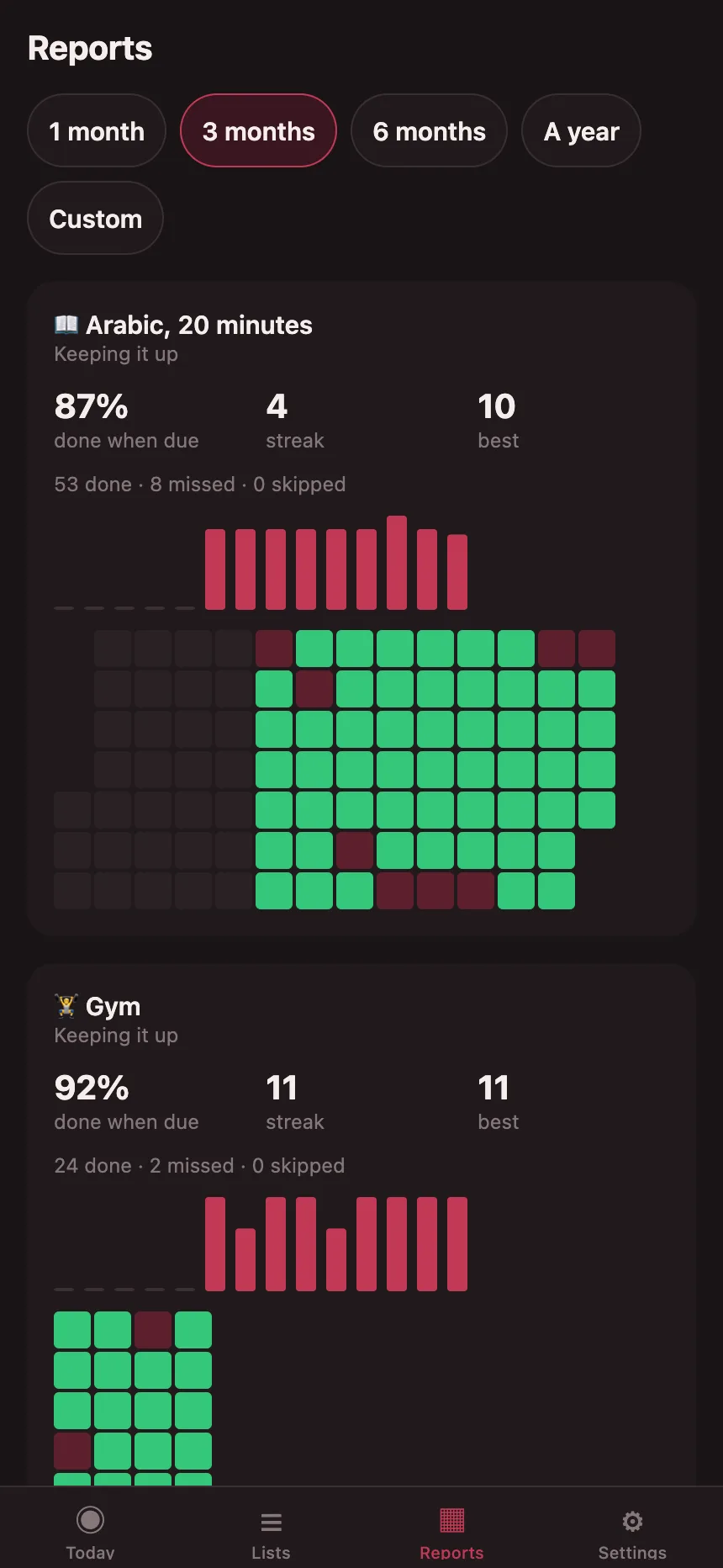
Mark a day done and watch the map fill in. Schedules are versioned, so changing a habit from daily to three times a week does not rewrite the months you already kept.
They are on the map because the suite was planned as a whole. Nothing below exists yet, and this page will say so until it does.
Services, fuel and documents — an oil change files itself as an expense on the finance side.
Medications, appointments and measurements, with the receipts landing where receipts belong.
Passports, registrations, insurance — and a warning well before one of them expires.
Real screens, captured from the real apps. The data in them is invented for this page — it belongs to nobody.
One sign-in serves Finance, Todo, Tracker and whatever lands next. Your username is the handle other people reach you by — to split a bill with you, or to put you on a list.
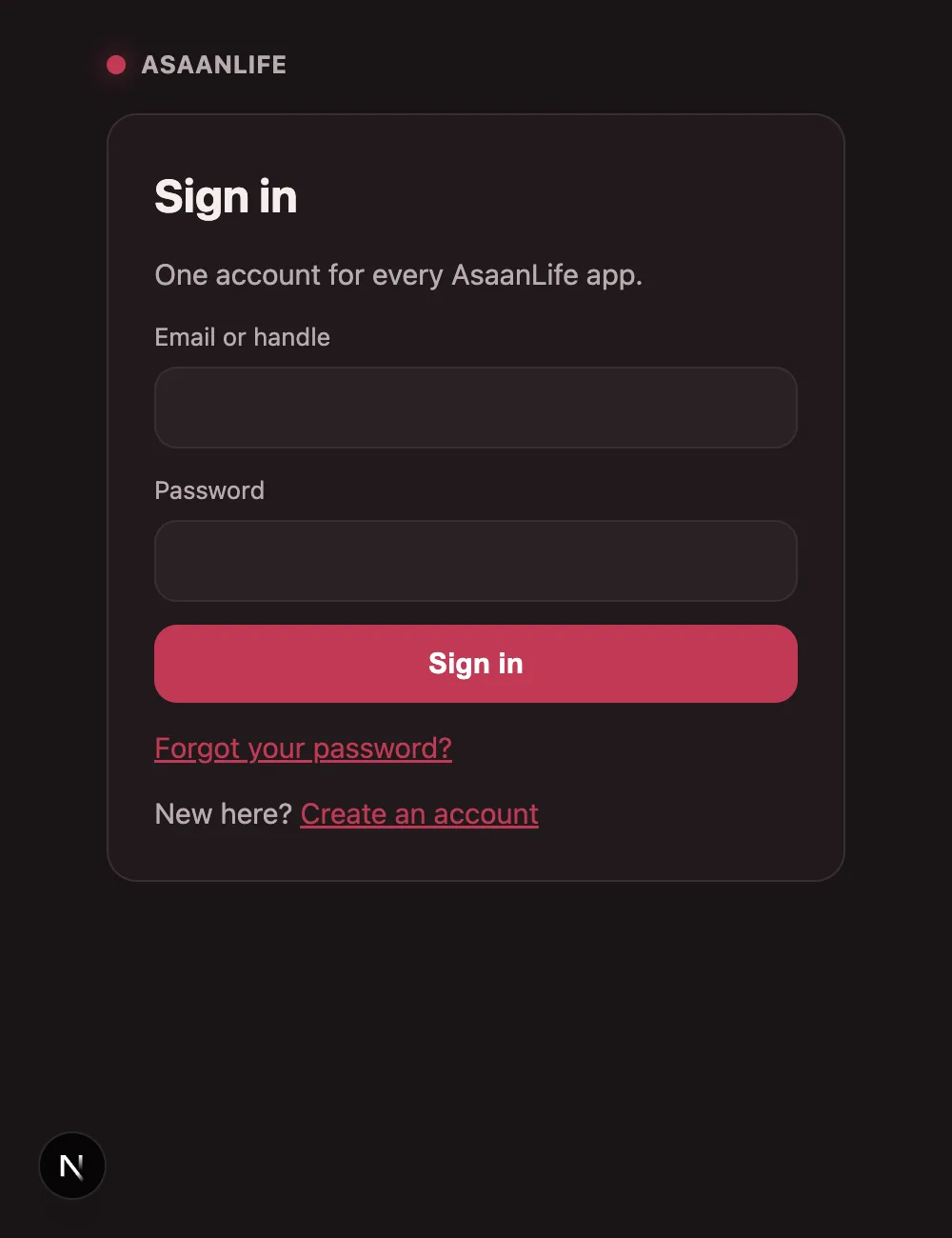
Accounts, jars, income, expenses and transfers. A balance in JOD and a travel card in USD sit side by side and are never added together — the totals are per currency, because that is the only honest answer.
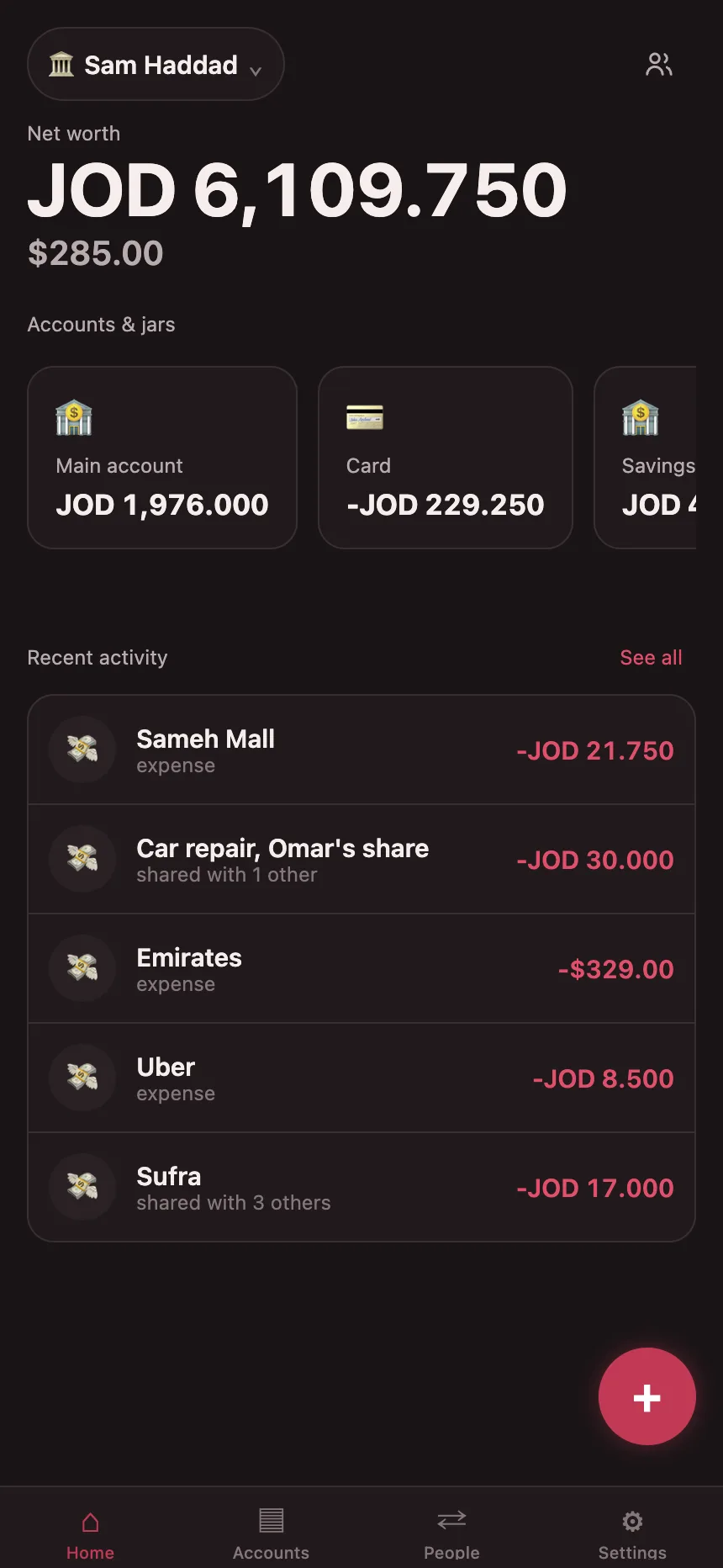
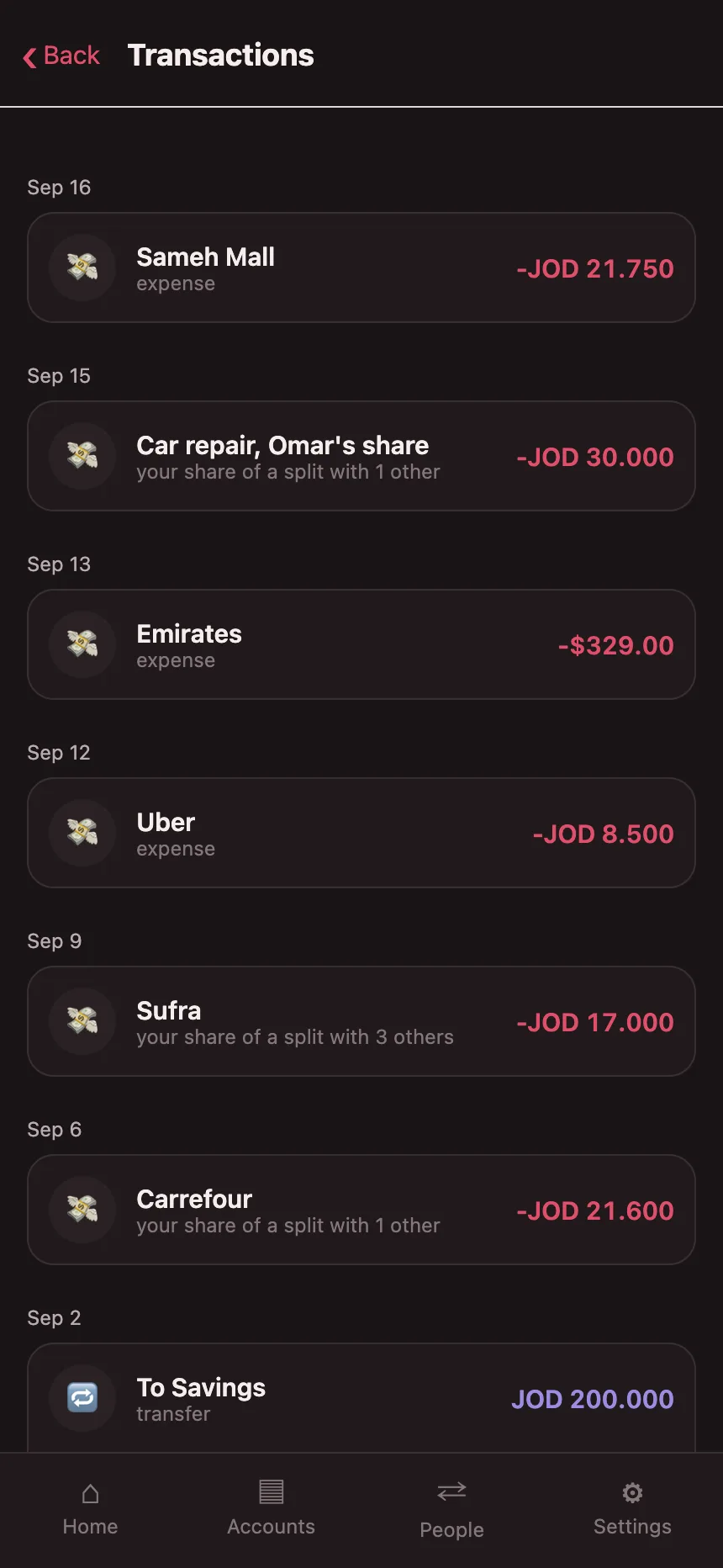
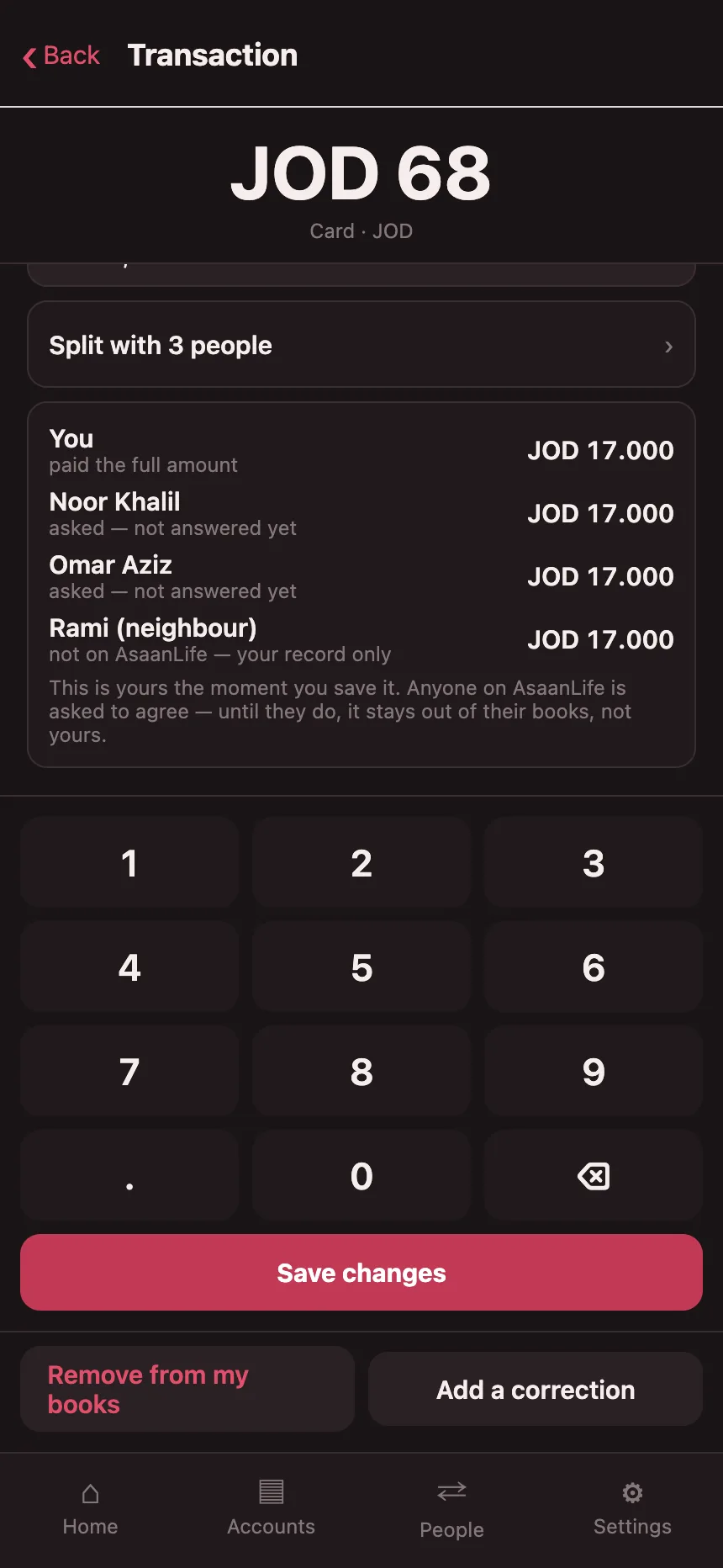
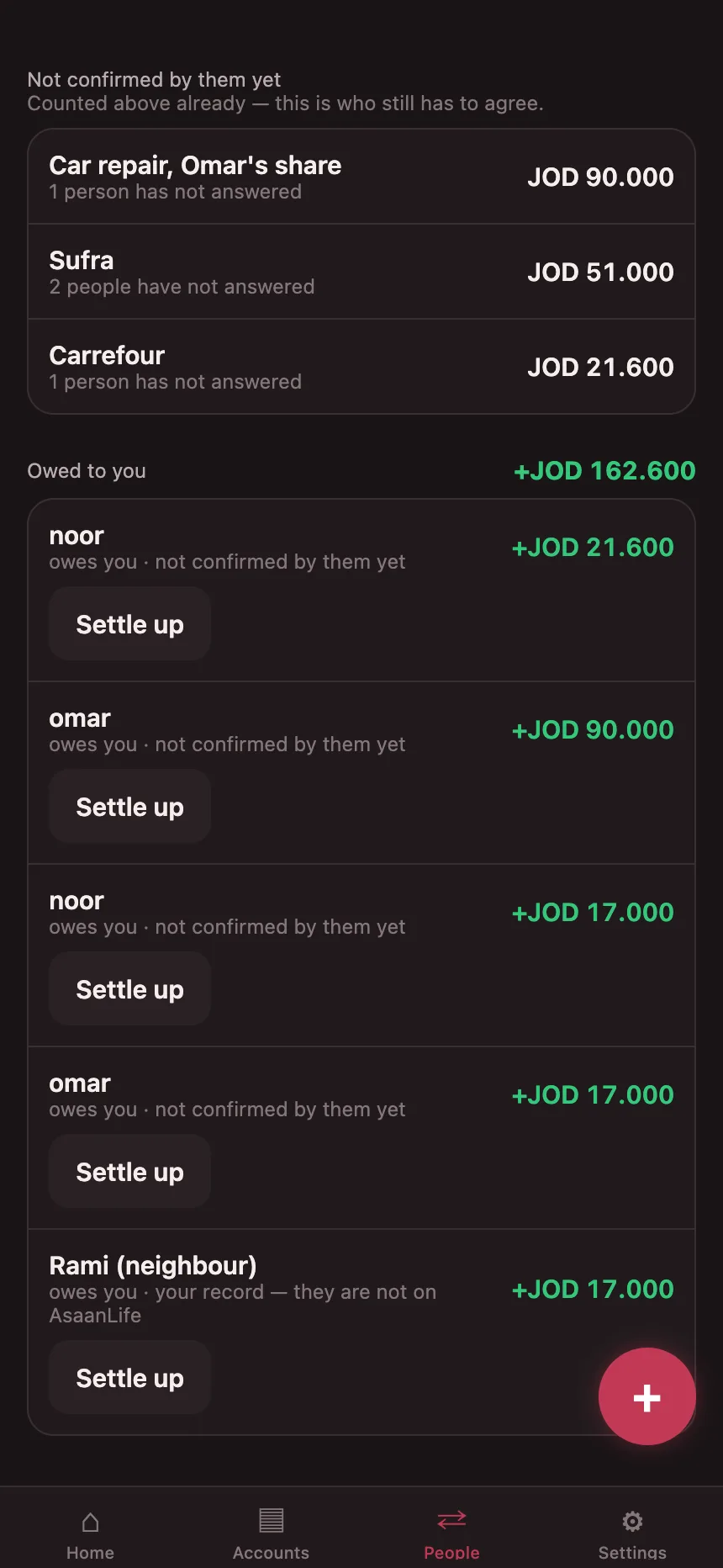
Put four people on a dinner and each of them is asked to agree. Until they do it stays in your books and out of theirs — and someone who is not on AsaanLife is simply a name you keep, with nothing sent to them.
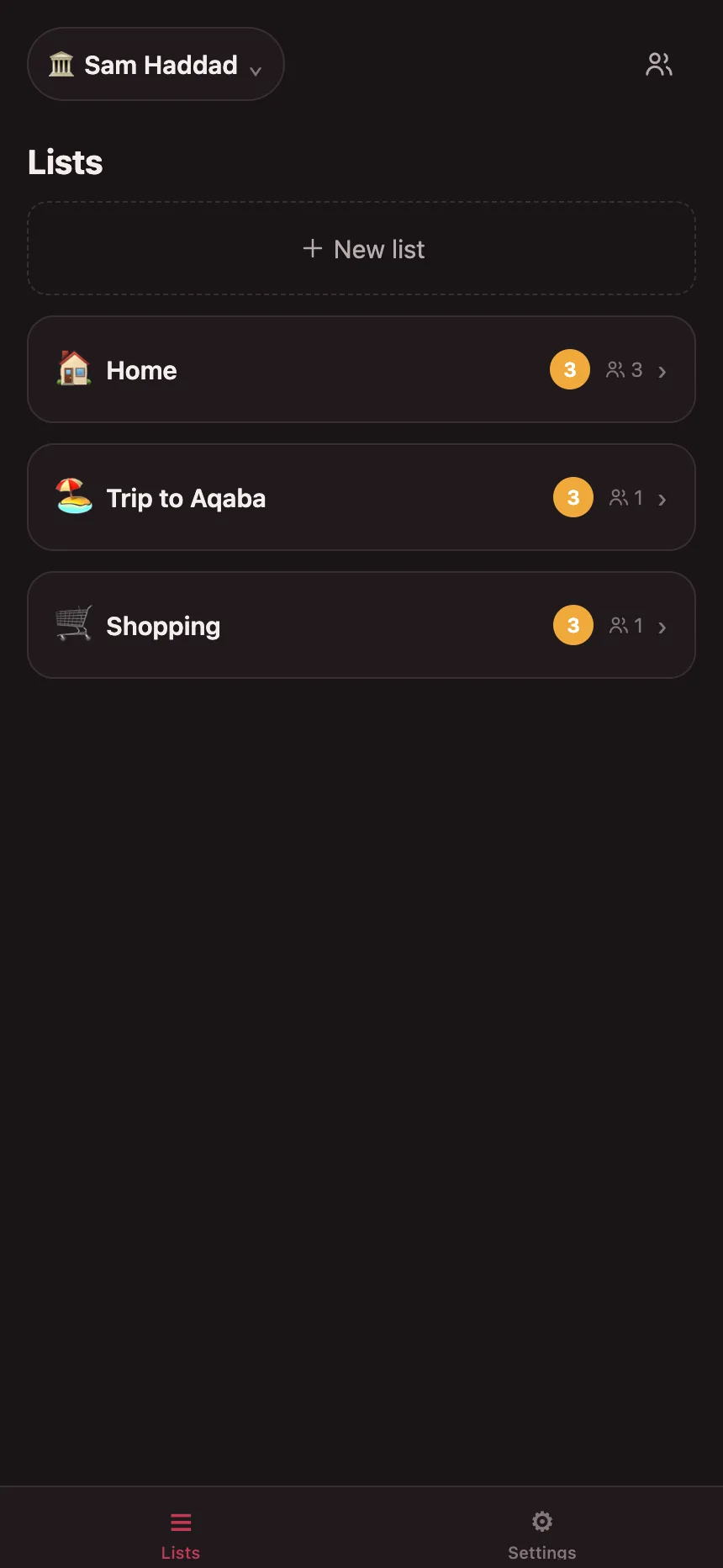
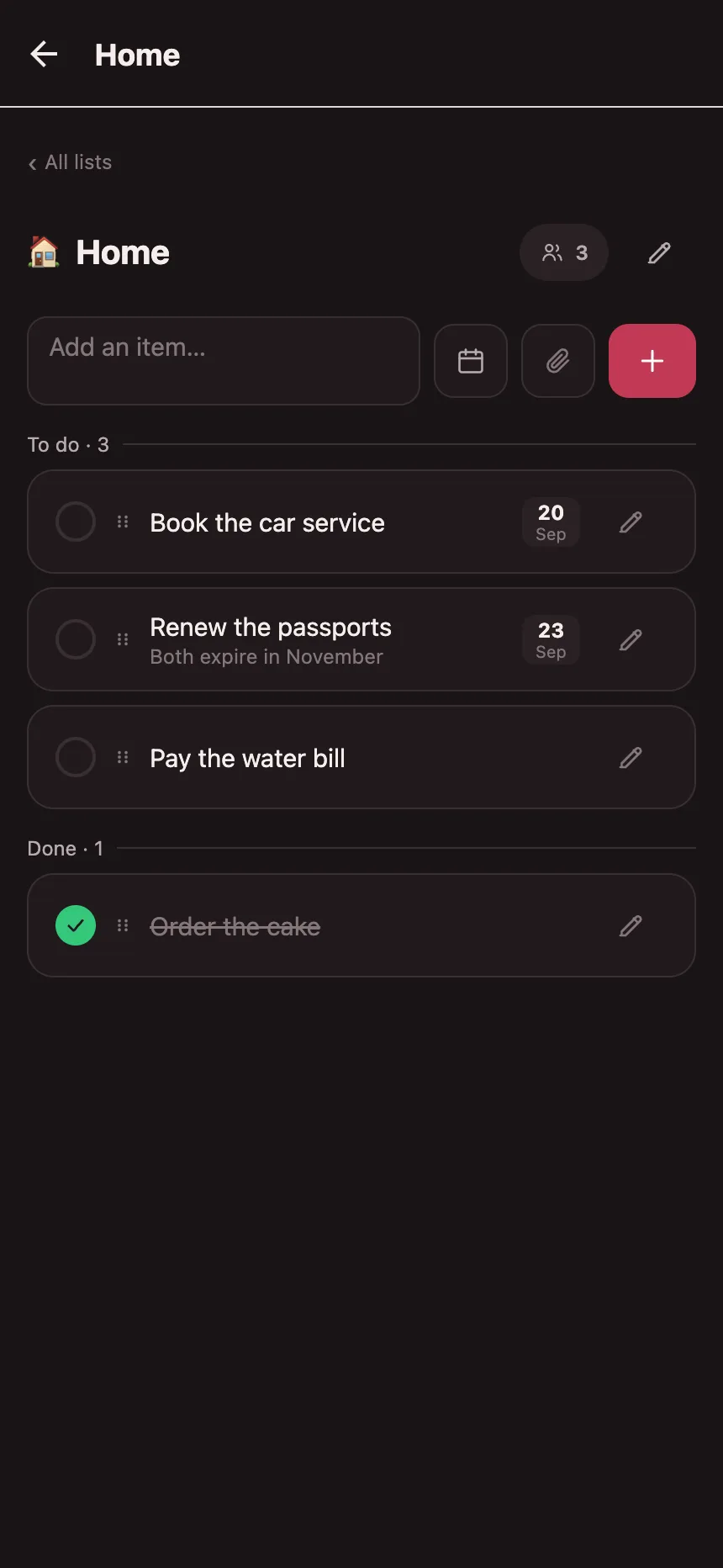
A shared list is shared for real: membership, an assignee per item, a day it is due, and the same list on everybody's phone. Done items drop to the bottom instead of vanishing.
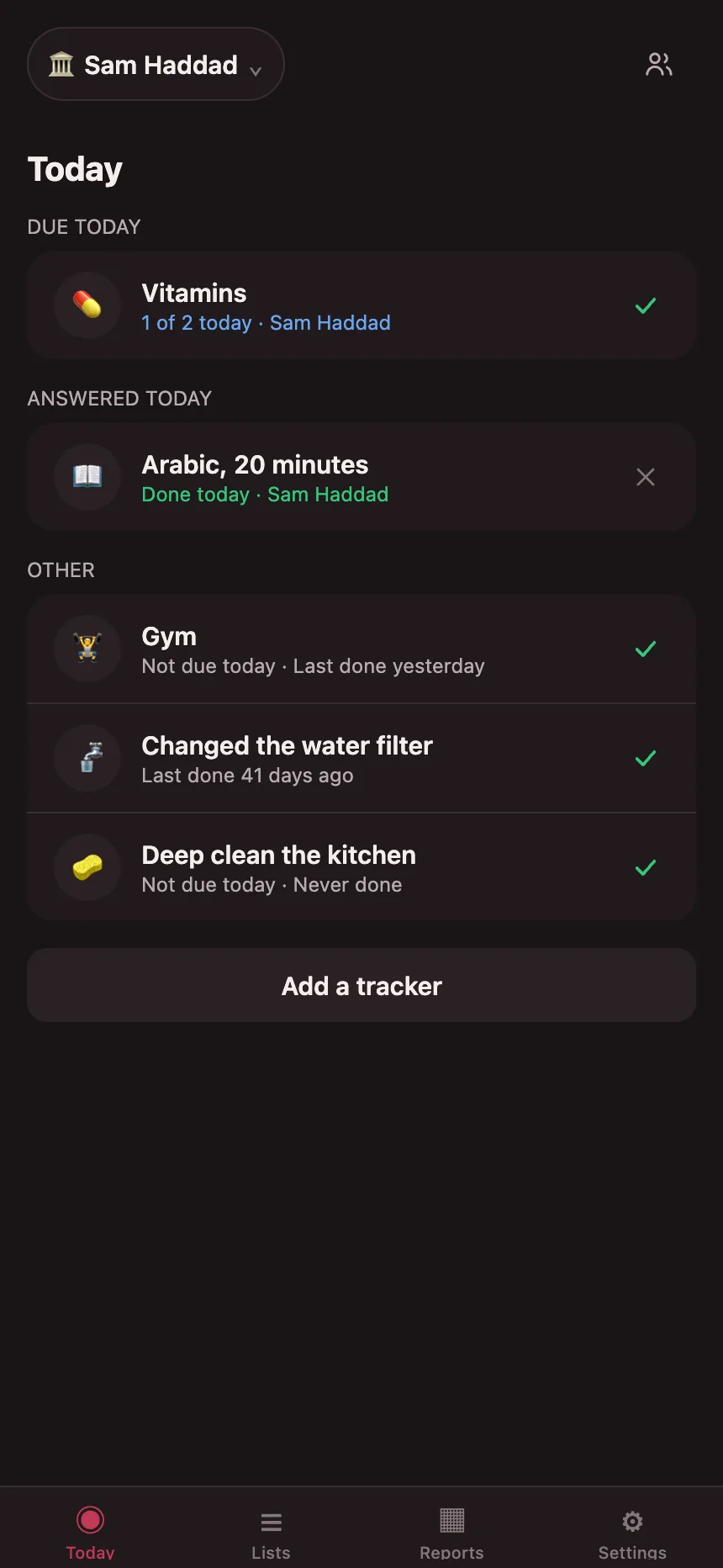
Daily, a few days a week, several times a day, or just “when did I last do this”. Mark the day and the map fills in; change the schedule and the months you already kept are still judged by the rule that was in force then.
A personal app is trusted with money and with other people’s data. These are the rules the suite is built on, rather than features bolted to the side of it.
Every amount is an integer in its currency's minor units, and every amount carries its own currency — no floats, no silent default. Convert between two and the rate is written onto the record, so last year's total still reads the way it did last year.
Sharing is per list, per tracker, per organization. A person you split a bill with sees that bill and their own share of it — not your accounts, not your other people, not the rest of your books.
Each app is an installable web app as well as a native one: add it to a phone's home screen, or use it in a browser on a laptop. The same account signs you into all of them.
Not a setting you switch on later. An account in JOD, a card in USD and a trip paid in AED live side by side, and a total is never the sum of two different currencies.
A suite of small, focused apps for the admin of ordinary life — money, shared lists, habits and duties — that share one account, one username and one set of organizations. You switch on the apps you want and ignore the rest; nothing breaks when an app is off.
No. Which apps your account has is data, not a deployment: enable Finance alone if that is all you need. An app you have not enabled shows up nowhere in the suite.
That is what organizations are for. Create a shared one, add the people who belong in it, and everything recorded there is theirs to see — with your personal organization staying entirely separate.
Not necessarily. Somebody with an account is reached by their username and answers in their own app. Somebody without one is a contact you record by name, and nothing is sent to them.
Any ISO 4217 currency, including the ones with three decimal places and the ones with none. Each amount keeps its own; a cross-currency operation records the rate it used rather than re-deriving it later from today’s.
Finance, Todo and Tracker are one codebase each for Android, iOS and an installable web app. The web app works today in any modern browser; the store builds come from the same code.
Create it once, and every app of the suite — the three that exist and the ones that follow — opens with the same sign-in.